
Can someone consent after a head injury?
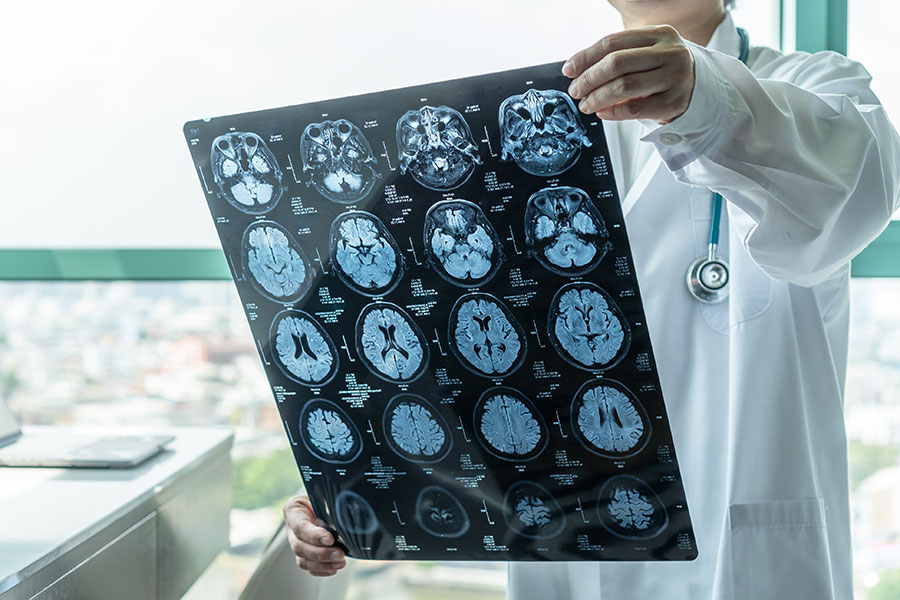
A mild Traumatic Brain Injury (mTBI), often referred to as a concussion, can be caused by a variety of impact (Randolph W Evans, 2024). We often see this condition in cases of motor vehicle collisions and physical assaults. Regardless of the cause, all mTBIs share a common mechanism: an external force causes the head and brain to move rapidly back and forth within the skull, leading to a temporary disruption in normal brain function. (Traumatic Brain Injury and Concussion, 2025) Individuals may exhibit symptoms immediately following the injury or experience delayed onset of signs and symptoms (Randolph W Evans, 2024).
In some situations, a police officer may interview an individual after a physical altercation or motor vehicle collision without recognizing that the person is experiencing an mTBI. This condition can impair cognitive function and affect the individual’s ability to fully understand information or make informed decisions due to the temporary disruption in brain activity. For this reason, a qualified medical professional is best suited to assess the individual’s capacity to provide informed consent at the time of the interview.
The ability to provide informed consent is dependent on an individual’s decision-making capacity, defined as the ability to understand information, appreciate the situation and its consequences, and communicate a choice (Jason Karlawish, 2026). In the context of traumatic brain injury (TBI), decision-making capacity can vary widely along a spectrum. In some cases, impairment is readily apparent, such as with severe brain injuries that result in clear neurological deficits or comatose states. However, in individuals with mild to moderate TBI, subtle symptoms — including mild confusion, memory disruption, and decreased concentration — may be present but easily overlooked, despite their potential impact on decision-making ability.
- After a minor car accident, a driver appears awake and able to talk with responding officers. During questioning, the driver struggles to remember what happened immediately before the crash, gives inconsistent answers, and has difficulty concentrating on the officer’s questions. They may agree to statements or decisions without fully understanding them because they are confused, fatigued, or experiencing slowed thinking due to the temporary disruption in brain function.
- Officers are dispatched to a reported physical altercation and, upon arrival, identify the adult victim who was assaulted. The individual is awake, able to answer basic questions, and reports sustaining multiple blows to the head. However, during transport to the hospital, the individual begins providing answers that are inconsistent with their initial statements to police. Given the cognitive impairment associated with a traumatic brain injury, the patient does not demonstrate the decision-making capacity required to provide informed consent at that time, and further evaluation by a medical professional is necessary to determine appropriate next steps.
In summary, deficits in decision making function are often experienced by individuals who suffer from a mTBI (Yuyang Wang, 2023). An interview performed in the setting of any level of head trauma should be taken with caution, as it may not hold up in court.
Works Cited
Jason Karlawish, M. (2026, January 07). Assessment of decision-making capacity in adults. From UptoDate: https://www.uptodate.com/contents/assessment-of-decision-making-capacity-in-adults?search=informed%20consent&source=search_result&selectedTitle=3~150&usage_type=default&display_rank=3
Randolph W Evans, M. F. (2024, November 13). Acute mild traumatic brain injury (concussion) in adults. From UptoDate: https://www.uptodate.com/contents/acute-mild-traumatic-brain-injury-concussion-in-adults?search=informed%20consent%20with%20mTBI&source=search_result&selectedTitle=4~150&usage_type=default&display_rank=3
Traumatic Brain Injury and Concussion. (2025, September 15). From CDC: https://www.cdc.gov/traumatic-brain-injury/about/index.html
Yuyang Wang, Q. C. (2023, December 03). Changes in decision making functions in patients with subacute mild traumatic brain injury. From European Journal of Neuroscience: https://onlinelibrary.wiley.com/doi/full/10.1111/ejn.16195?msockid=2658ba5040ee6f9014feafac41686eb6
March’s Open Webinars
Blunt Force Trauma: Just because we can’t see it doesn’t mean it isn’t there- Click here to register
Alcohol and the Body: A Toxicologist’s Perspective- Click here to register
Critical Call: Separating Injury from Illness in Pediatric Trauma (NEW TOPIC)- Click here to register
Alternate Light Source Photography: Basic understanding of emerging science for use in medico-legal settings – Click here to register
Don’t miss our newsletter! Topics covered are:
Assault / Trauma
DUI / General Medical
Child & Elder Abuse / Neglect
Mental Health / Toxicology
Sign up here.