Medical Records: Complications & Procedures

For more information on the hospital course, other documents to look for include: Operative reports: These are generated if the patient undergoes any surgeries, and a separate report will be generated for each operation. Look at the pre and post-procedure diagnosis. Radiological reports: Look at the “Impressions.” Again, there will be one report for each […]
Case Study: Burn Injuries

Mr. John Smith, age 40 sustained multiple injuries when he jumped from the second story of a burning house. He was treated at the scene by emergency medical services and transported to the emergency department of the local medical center where he was assessed and treated. It was estimated that burns covered 25% of his […]
Legal implications of nasal fractures

Our medical expert recently got retained in a criminal case where the victim suffered an injury to her nose. She had a reported history of previous nasal trauma but was diagnosed with a nasal fracture by x-ray in the emergency department. Our expert testified that a diagnosis of nasal fracture made by x-ray has a high […]
Nasal Fractures: What does the literature say?

Legal Aspects in Nasal Fractures Rhinology, 1991 ABSTRACT A criminal act is involved in a high percentage of cases of nasal fracture, and exact medical information describing the damages found is mandatory for the criminal court. It is necessary, that the medical information are obtained from the ENT-department, where the patient is treated, as the […]
Does the patient in your case have a nasal fracture?

According to Dr. Greg Gilbert, from Stanford University Medical Center, x-rays of the nose serve no purpose in diagnosing nasal fractures: “A nasal fracture is a clinical diagnosis and not one that should be made with radiographs. They have a high false positive rate and cannot be relied upon with any degree of certainty as […]
What is a nasal fracture, really?

Nasal fractures are the most common facial fracture and the third most common fracture of any bone in the body. They most frequently occur as a result of assault or motor vehicle collisions. What we call our “nose” is made up of both bone and cartilage where the cartilage sits in front of the bone. […]
Hip Dislocation: Legal Implications
When considering taking legal action for possible medical negligence related to delayed reduction in a traumatic hip dislocation, there are many factors that need to be considered. There are other causes of avascular necrosis. Examples include, but are not limited to: arthritis, cancer, gout, alcohol use, joint injuries and long-term medication use involving corticosteroids, bisphosphonates […]
Avascular Necrosis

It has been shown that the risk for vascular complications is significantly higher if a dislocated hip is not able to be reduced within 6 hours after the initial injury. A more positive prognosis also depends upon several factors including the severity of the injury; the severity of the dislocation including if the dislocation involved […]
Traumatic Hip Dislocations
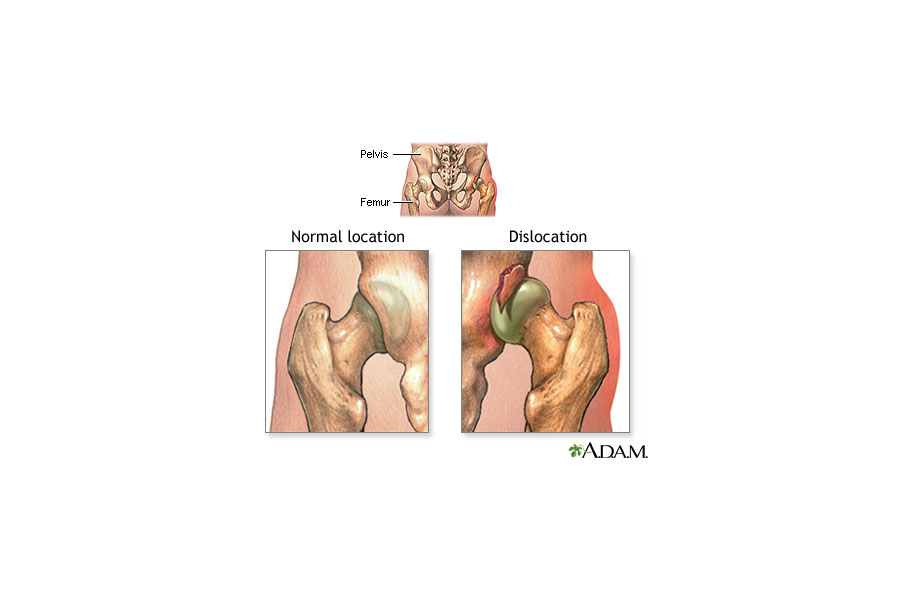
Traumatic Hip Dislocation A dislocation of the hip occurs when the femur bone is displaced from the socket of the pelvic bone. A traumatic dislocation is not an injury that occurs easily. It requires a direct force of high-energy to the thigh. Collision or impact forces causing dislocations can involve a serious fall; an injury […]
Hip Dislocations: Anatomy
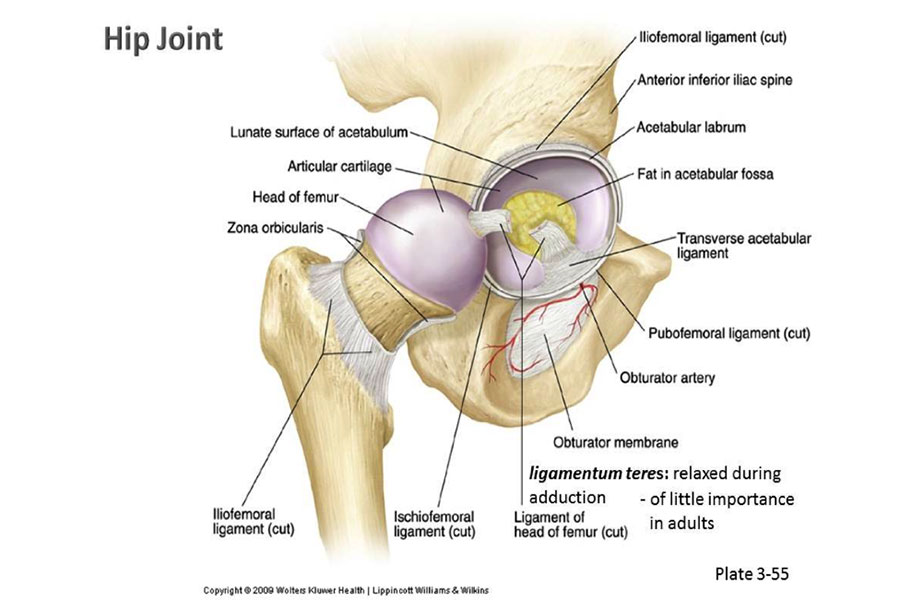
The hip is a joint comprised of a ball and socket. The acetabulum is the socket found on the pelvic bone; the femoral head on the upper end of the thighbone is the ball. Articular cartilage covers the ball and socket allowing for smooth movement with low friction. There is a generous blood supply within […]