What is an Intracranial Hemorrhage?

Intracranial hemorrhage is an accumulation of blood inside the skull; in or around the brain that can have traumatic and non- traumatic causes. Bleeding may occur in the brain parenchyma (intercerebral) or in the surrounding coverings on the brain. The accumulation of blood inside the skull causes pressure on the brain and decreased circulating blood flow, […]
How is a concussion managed?

Conservative management of concussions is standard practice. Physical and cognitive rest is recommended for at least 24 hours pending cessation of symptoms. Gradual return to work, school, and physical activity is also endorsed. For a person with prolonged symptoms, reevaluation and treatment may be beneficial. (Evans, Concussion and mild traumatic brain injury, 2013) Admission to […]
What is post-concussion syndrome?

One common consequence of concussion is the post-concussion syndrome (PCS), which is a group of symptoms that includes headache, dizziness, decreased concentration, memory problems, irritability, fatigue, visual disturbances, sensitivity to noise, judgment problems, depression, and anxiety. PCS is usually associated with mild traumatic brain injury (TBI), such as a concussion, but may also occur after […]
How is a concussion diagnosed?

The initial diagnosis of concussion is based on evaluation of the symptoms a person reports, or someone else observes, after sustaining the injury. Concussion is commonly divided into three different types: Grade 1, Grade 2, and Grade 3. The chart below distinguishes the features of each: [su_table] Grade Behavior Signs Time 1 Confused but remains […]
What exactly is a concussion?

When a bump, jolt, or blow to the head causes a change in the way the brain works, it is called a concussion. A concussion is a type of traumatic brain injury (TBI) that causes the brain to move quickly back and forth inside the skull. They are sometimes considered “mild” because concussions are not […]
Traumatic Injuries: GBI/SBI

In regards to Great Bodily Injury or Significant Bodily injury: Many wounds from blunt force trauma by themselves would not qualify as permanently disabling or disfiguring. The severity of the wound oftentimes is not as readily obvious as it might seem. Many lacerations bleed heavily, especially those in the head, and are not necessarily even […]
Patterned Injuries from Trauma

Patterned Injuries: These are injuries in which the physical characteristics of the wound match the object that cause them. They can be present in all types of injuries: This month’s criminal topic is Cuts and Bruises (Blunt Force Trauma). Topics covered are: Bruises and dating of them (10/3/14) Abrasions and […]
Multiple Injuries in Blunt Force Trauma

Multiple Injuries: You can see multiple types of blunt force injuries caused by the same mechanism and in the same moment. An example of this is an injury similar to the image depicted, where you see abrasions, bruises and lacerations. This would require a direct impact to cause the bruise and the laceration with a […]
Abrasions & Lacerations

An Abrasion is a scrape from friction between the skin and another surface. The surface does not necessarily need to be hard, but the softer it is, the more friction is needed. An example of hard surface abrasions are road rash from motor vehicle accidents, where the skin is dragged one direction across the pavement. […]
Bruises & Dating of Them
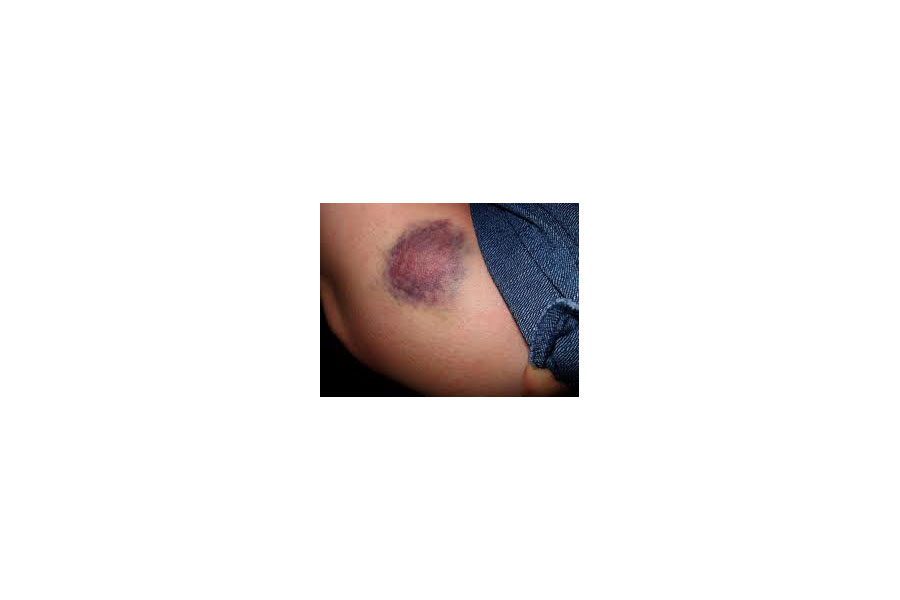
Contusion: This is a bruise and is caused by an impact with a hard object or pressure that causes the blood vessels under the skin to burst and blood to leak out into the cellular space. Typically appears as a range of colors in a localized area on the skin. Current literature states that bruises […]