Two Black Eyes But He Swears He Didn’t Hit Her {Assault/Trauma}

Two Black Eyes, also known as Raccoon’s eyes, is a sign of a skull fracture and does not necessarily indicate blunt force trauma to the face. Because this type of skull fracture is often missed on radiology studies, a medical expert is needed to review the records and determine the cause of the bruising. […]
Traumatic Injuries: GBI/SBI

In regards to Great Bodily Injury or Significant Bodily injury: Many wounds from blunt force trauma by themselves would not qualify as permanently disabling or disfiguring. The severity of the wound oftentimes is not as readily obvious as it might seem. Many lacerations bleed heavily, especially those in the head, and are not necessarily even […]
Patterned Injuries from Trauma

Patterned Injuries: These are injuries in which the physical characteristics of the wound match the object that cause them. They can be present in all types of injuries: This month’s criminal topic is Cuts and Bruises (Blunt Force Trauma). Topics covered are: Bruises and dating of them (10/3/14) Abrasions and […]
Abrasions & Lacerations

An Abrasion is a scrape from friction between the skin and another surface. The surface does not necessarily need to be hard, but the softer it is, the more friction is needed. An example of hard surface abrasions are road rash from motor vehicle accidents, where the skin is dragged one direction across the pavement. […]
Bruises & Dating of Them
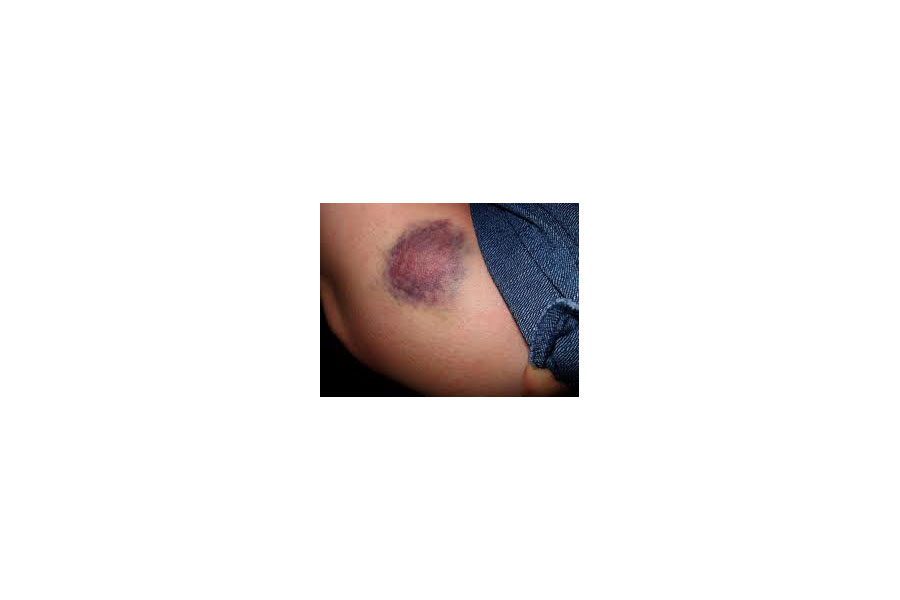
Contusion: This is a bruise and is caused by an impact with a hard object or pressure that causes the blood vessels under the skin to burst and blood to leak out into the cellular space. Typically appears as a range of colors in a localized area on the skin. Current literature states that bruises […]
Strangulation – how it’s done

Carotid Restraint, Manual Strangulation, Ligature Strangulation and Hanging all have different mechanisms and different symptoms and time to unconsciousness. Read about each type here.
Can you strangle someone and not leave a mark?

There may be absolutely no outward physical sign of the strangulation. Approximately 50% of documented cases exhibit no visible injury. An additional 35% have injuries that are too minor to photograph. (Training Institute on Strangulation Prevention, 2014) Therefore the absence of physical signs of strangulation does not exclude the event. This often means that the medical care is delivered and the legal case is built, solely on the subjective symptoms of the victim. When there are physical signs of strangulation, they are commonly non-specific and may be caused by a number of conditions or other trauma.
What do you know about strangulation? A few facts
Abusers do not always understand the medical severity of the act of strangulation
Lethality is based on duration, quantity and surface area of applied force